

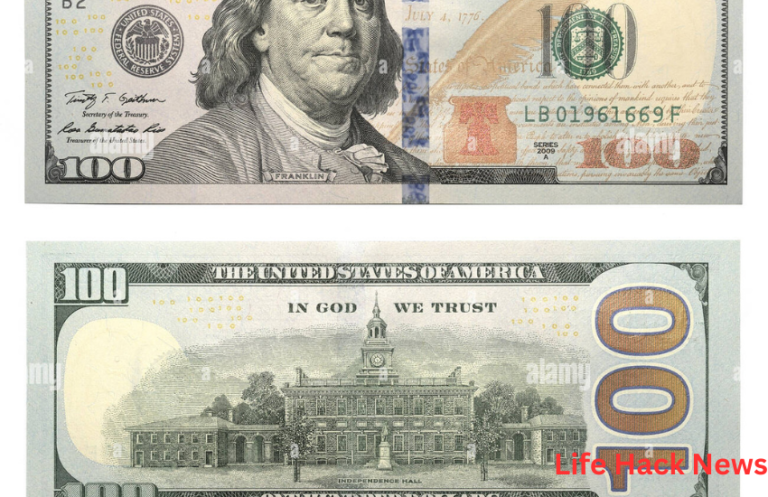
The new US dollar 100 bill is more than just a piece of currency—it’s a symbol of trust, innovation, and economic power. In an era where digital payments dominate conversations and cryptocurrencies disrupt traditional finance, the continued evolution of physical money might seem surprising. Yet the redesigned $100 bill stands as a testament to how seriously governments take the role of secure, tangible currency in a rapidly changing world.
For startup founders, entrepreneurs, and tech professionals, understanding the nuances behind something as familiar as the $100 bill offers insight into broader themes: security innovation, user trust, anti-counterfeiting technology, and even brand design. The story of the new US dollar 100 is not just about money—it’s about systems that scale globally and remain resilient under pressure.
Table of Contents
ToggleWhy the New US Dollar 100 Was Redesigned
The redesign of the $100 bill was driven primarily by the need to combat counterfeiting. As technology advanced, so did the ability of bad actors to replicate currency with alarming accuracy. Governments had to respond with innovation that would stay ahead of increasingly sophisticated threats.
The United States introduced the new design after more than a decade of research and development. It wasn’t simply a visual refresh—it was a complete overhaul of how physical currency integrates security features. The challenge was clear: create a banknote that is easy for the public to verify but extremely difficult to duplicate.
Beyond security, there was also a need to reinforce global confidence. The $100 bill is one of the most widely circulated banknotes in the world, especially outside the United States. For many economies, it acts as a store of value and a hedge against local currency instability. Maintaining its integrity is critical not just domestically, but internationally.
Key Features of the New US Dollar 100
At first glance, the new $100 bill might look like a stylistic update. But a closer inspection reveals a complex integration of advanced technologies and thoughtful design.
One of the most striking features is the blue 3D security ribbon that runs vertically across the front of the bill. Unlike traditional printed elements, this ribbon is woven into the paper itself. When tilted, the images of bells and numbers move in a way that is nearly impossible to replicate using conventional printing techniques.
Another prominent addition is the color-shifting ink used in the large “100” printed on the front. Depending on the viewing angle, the color transitions from copper to green. This subtle yet powerful feature allows for quick visual verification.
There is also the bell in the inkwell—a design element that blends symbolism with security. When tilted, the bell appears and disappears, adding another layer of authentication.
To better understand these features, here’s a breakdown:
| Feature | Description | Purpose |
|---|---|---|
| 3D Security Ribbon | Blue ribbon with moving images woven into the bill | Prevents replication |
| Color-Shifting Ink | Changes color when tilted | Easy public verification |
| Bell in the Inkwell | Hidden image that appears with movement | Anti-counterfeiting |
| Microprinting | Tiny text visible only under magnification | Detects fake currency |
| Watermark | Embedded portrait visible under light | Authenticity check |
These features work together as a layered defense system. Much like cybersecurity frameworks, no single feature is relied upon exclusively. Instead, the strength lies in the combination.
The Technology Behind the Currency
What makes the new US dollar 100 particularly fascinating is how it merges traditional craftsmanship with modern engineering. The paper itself is not standard paper—it’s a blend of cotton and linen that gives it durability and a distinctive texture.
The 3D ribbon alone required years of development. It uses micro-optics technology, where thousands of tiny lenses are embedded into the ribbon. This creates the illusion of movement, a feature that standard printers simply cannot reproduce.
From a tech perspective, this is analogous to multi-factor authentication. Just as digital systems require multiple layers of verification, the $100 bill employs a combination of tactile, visual, and embedded security features.
For entrepreneurs working in fintech or security, this is a powerful reminder: trust is built through layered systems, not single solutions.
Global Impact of the New US Dollar 100
The influence of the $100 bill extends far beyond U.S. borders. In many parts of the world, it functions as a parallel currency. People use it to store wealth, conduct transactions, and protect against inflation.
This global demand means that any redesign carries significant implications. A poorly executed update could disrupt markets, create confusion, or even undermine confidence. That’s why the rollout of the new US dollar 100 was carefully managed, with extensive public education campaigns.
Interestingly, a large percentage of $100 bills circulate outside the United States. This makes it one of the most internationally recognized financial instruments. For startups operating globally, this highlights an important lesson: products with universal trust have immense power.
Lessons for Entrepreneurs and Tech Leaders
While the $100 bill might seem unrelated to startups or digital innovation, it offers several valuable lessons.
First, user experience matters—even in currency design. The new features are not just secure; they are intuitive. Anyone can tilt the bill and verify its authenticity without specialized tools. This mirrors the importance of designing products that are both powerful and user-friendly.
Second, continuous innovation is essential. The redesign wasn’t reactive—it was proactive. It anticipated future threats and addressed them before they became widespread. In the startup world, this mindset can be the difference between leading a market and falling behind.
Third, trust is everything. The value of the $100 bill is not in the paper—it’s in the confidence people place in it. The same applies to digital platforms, financial services, and emerging technologies. Without trust, even the most advanced solutions fail to gain traction.
Physical Currency in a Digital World
With the rise of digital payments, mobile wallets, and cryptocurrencies, some have predicted the decline of physical cash. Yet the continued investment in the new US dollar 100 suggests otherwise.
Cash still plays a critical role in many economies. It provides accessibility for those without banking infrastructure, offers privacy in transactions, and serves as a reliable backup during system outages.
Rather than becoming obsolete, physical currency is evolving alongside digital systems. The two are not mutually exclusive—they complement each other.
For tech professionals, this coexistence is worth noting. The future of finance is not purely digital or physical; it is hybrid. Solutions that bridge these worlds will likely define the next generation of financial innovation.
The Design Philosophy Behind the Bill
Beyond security and functionality, the new $100 bill reflects a thoughtful approach to design. The portrait of Benjamin Franklin remains central, reinforcing continuity and tradition. At the same time, modern elements like vibrant colors and dynamic features signal progress.
This balance between heritage and innovation is something many brands strive for. It ensures familiarity while embracing change.
In many ways, the bill acts as a brand ambassador for the United States. Its design communicates stability, sophistication, and technological leadership.
For founders building global brands, this is a powerful example of how design can convey values without words.
Challenges and Criticism
No major redesign comes without challenges. The new US dollar 100 faced delays during production due to technical issues with the 3D ribbon. This highlights the complexity of integrating cutting-edge technology into mass production.
There were also concerns about cost. Developing and producing the new bills required significant investment. However, when weighed against the potential losses from counterfeiting, the investment becomes justifiable.
Some critics argue that as digital payments rise, investing heavily in physical currency may seem outdated. But this perspective often overlooks the billions of people who still rely on cash daily.
What the Future Holds
Looking ahead, the evolution of currency is far from over. We may see even more advanced features, including integration with digital verification systems or blockchain-based tracking.
At the same time, central bank digital currencies (CBDCs) are gaining attention. These could reshape how governments issue and manage money. However, even in such scenarios, physical currency is unlikely to disappear entirely.
The new US dollar 100 represents a bridge between past and future—a tangible reminder that innovation doesn’t always mean abandoning what works.
Conclusion
The new US dollar 100 is a remarkable blend of art, science, and strategy. It demonstrates how even the most traditional systems can evolve to meet modern challenges. Through advanced security features, thoughtful design, and global relevance, it continues to uphold trust in an increasingly complex financial landscape.
For entrepreneurs, tech leaders, and digital innovators, the lessons are clear: prioritize trust, embrace layered security, and never stop evolving. Whether you’re building a fintech platform or scaling a startup, the principles behind the $100 bill are surprisingly applicable.
In a world driven by rapid technological change, the enduring strength of the $100 bill reminds us that innovation is not just about what’s new—it’s about what continues to work, securely and reliably, at scale.
