

In the fast-moving world of startups, innovation often comes from unlikely places. Sometimes, it’s not a new technology or a disruptive business model that shifts perspective—it’s a simple concept applied in a powerful way. The idea of powerchord e is one such concept. At first glance, it may sound technical or niche, but beneath the surface lies a framework that resonates deeply with how modern professionals build, scale, and sustain momentum.
Whether you’re a founder navigating early-stage chaos, a tech professional optimizing systems, or a digital strategist seeking clarity, understanding powerchord e can unlock a new way of thinking about efficiency, alignment, and execution.
Understanding Powerchord E in a Practical Context
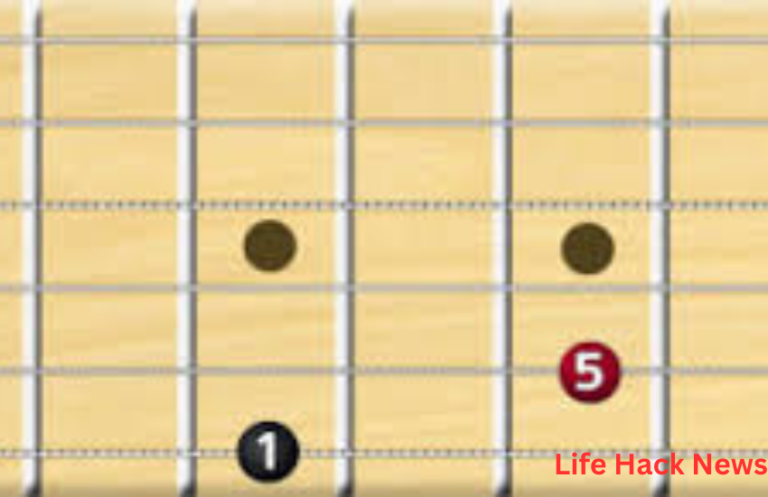
At its core, powerchord e represents a principle of simplified strength. Borrowed metaphorically from music—where a power chord delivers a full, impactful sound using minimal notes—the concept translates into business and technology as doing more with less, but doing it better.
In real-world terms, powerchord e is about identifying the essential components that drive results and amplifying them instead of overcomplicating systems. Think of it as stripping away unnecessary layers and focusing on what truly moves the needle.
For startups, this often means prioritizing a few high-impact features rather than launching with an overloaded product. For engineers, it’s about writing clean, efficient code instead of bloated architectures. For leaders, it’s about clarity in decision-making rather than analysis paralysis.
Why Simplicity Wins in Complex Environments
Modern digital ecosystems are inherently complex. Cloud infrastructure, AI integrations, distributed teams, and global markets all add layers of complication. Yet, the organizations that thrive are often the ones that simplify.
Powerchord e works because it aligns with how humans process information. Simplicity enhances speed, reduces errors, and improves communication. When teams understand what matters most, they execute faster and with greater confidence.
Consider product development cycles. A team that embraces powerchord e principles will focus on a minimum viable product (MVP) that solves a core problem exceptionally well. Instead of chasing perfection across multiple features, they refine the one element that delivers the most value.
This approach not only accelerates time to market but also creates a stronger feedback loop with users.
Applying Powerchord E to Startup Strategy
Startup founders often face a paradox: infinite possibilities but limited resources. This is where powerchord e becomes particularly valuable.
Rather than spreading resources thin across marketing channels, product features, and operational experiments, founders can identify a “core chord”—a combination of key actions that drive growth—and double down on it.
For example, a SaaS startup might discover that:
- One specific customer segment converts significantly better than others
- A single acquisition channel yields the highest ROI
- A core feature drives the majority of user engagement
Instead of diversifying prematurely, powerchord e encourages focusing intensely on these winning elements.
Strategic Focus Table
| Area | Traditional Approach | Powerchord E Approach |
|---|---|---|
| Product Development | Build many features at once | Focus on one core feature |
| Marketing | Spread across multiple channels | Double down on top-performing one |
| Team Structure | Large, specialized teams | Small, agile, cross-functional |
| Decision Making | Data overload and slow analysis | Clear priorities and fast action |
| Growth Strategy | Broad experimentation | Targeted, high-impact scaling |
This table highlights a critical shift: moving from breadth to depth.
The Engineering Perspective: Efficiency Over Complexity
In software development, complexity is often the silent killer of scalability. Systems that are over-engineered become difficult to maintain, expensive to scale, and prone to failure.
Powerchord e offers a counterbalance. It promotes building systems that are robust yet minimal—designed to perform core functions exceptionally well without unnecessary dependencies.
This doesn’t mean cutting corners. Instead, it means making intentional choices about architecture, tools, and processes.
For instance, a development team might choose a simpler tech stack that allows faster iteration rather than adopting every new framework available. Over time, this leads to more stable systems and faster deployment cycles.
The result is not just efficiency—it’s resilience.
Leadership and Decision-Making Through the Lens of Powerchord E
Leadership in high-growth environments requires clarity. When everything feels urgent, knowing what truly matters becomes a competitive advantage.
Powerchord e helps leaders cut through noise. By focusing on a few critical priorities, leaders can align teams, reduce confusion, and drive consistent execution.
This approach also improves communication. When teams understand the “why” behind decisions and see a clear direction, they are more engaged and productive.
A practical example is goal setting. Instead of overwhelming teams with dozens of KPIs, leaders can define a small set of high-impact metrics that guide behavior and measure success.
This clarity transforms how teams operate on a daily basis.
The Psychological Edge: Reducing Cognitive Load
Beyond strategy and execution, powerchord e has a psychological dimension. In high-pressure environments, cognitive overload is a real challenge.
When individuals and teams are juggling too many priorities, decision fatigue sets in. Productivity drops, and mistakes increase.
By simplifying focus, powerchord e reduces this cognitive burden. It allows professionals to channel their energy into meaningful work rather than constantly switching contexts.
This is particularly relevant for entrepreneurs who often wear multiple hats. By identifying their own “power chord”—the few activities that generate the most impact—they can operate more effectively without burning out.
Scaling Without Losing Focus
One of the biggest challenges startups face is maintaining focus as they scale. Growth introduces new variables: more customers, more employees, more processes.
Without a guiding principle, complexity can spiral out of control.
Powerchord e acts as an anchor during this phase. It ensures that as the organization expands, it doesn’t lose sight of what made it successful in the first place.
Companies that scale effectively often retain a strong sense of simplicity at their core. They evolve, but they don’t overcomplicate.
This balance between growth and focus is what separates sustainable businesses from those that struggle under their own weight.
Real-World Applications Across Industries
The versatility of powerchord e makes it applicable across industries.
In fintech, it might mean focusing on a seamless user experience rather than adding numerous financial tools. In e-commerce, it could involve optimizing a single high-performing product line instead of expanding too quickly. In healthcare technology, it may translate into building a reliable core system before layering advanced features.
Even in content creation and digital media, the principle holds. Successful creators often focus on a specific niche and format, refining it until it resonates deeply with their audience.
Across these examples, the pattern is clear: clarity and focus drive impact.
Avoiding the Misinterpretation of Simplicity
It’s important to clarify that powerchord e is not about doing less for the sake of it. It’s about doing the right things with greater intensity and precision.
There’s a difference between simplicity and oversimplification. The former requires insight and discipline; the latter can lead to missed opportunities.
Adopting powerchord e effectively means continuously evaluating what matters most and adjusting focus as circumstances evolve.
This dynamic approach ensures that simplicity remains a strength rather than a limitation.
Building a Powerchord E Mindset
Embracing powerchord e is as much about mindset as it is about strategy. It requires a willingness to question assumptions, eliminate distractions, and prioritize impact over activity.
For professionals and teams, this can start with a few simple practices:
Reflect regularly on what drives the most value. Eliminate tasks and processes that don’t contribute meaningfully. Communicate priorities clearly and consistently. Resist the temptation to chase every new opportunity.
Over time, these habits create a culture of focus and intentionality.
Conclusion: The Power of Less, Done Right
In a world that often equates complexity with sophistication, powerchord e offers a refreshing perspective. It reminds us that true strength lies in clarity, focus, and execution.
For startup founders, it provides a framework to navigate uncertainty with confidence. For tech professionals, it offers a path to build systems that are both efficient and scalable. For leaders, it serves as a guide to align teams and drive meaningful progress.
Ultimately, powerchord e is not just a concept—it’s a way of working that prioritizes impact over noise. And in today’s competitive landscape, that can make all the difference.
