

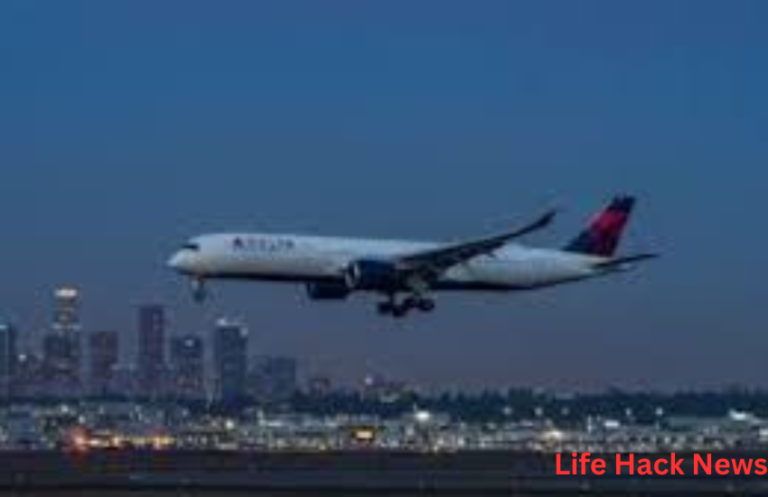
When news broke about delta flight dl275 diverted lax, it quickly caught the attention of travelers, aviation watchers, and business professionals alike. Flight diversions are not uncommon, but each incident carries lessons about operational resilience, passenger safety, and the complex systems that keep global travel running smoothly. For founders, entrepreneurs, and tech-minded readers, this isn’t just an aviation story—it’s a real-world case study in crisis management, decision-making under pressure, and system reliability.
Let’s unpack what happened, why it matters, and what insights it offers beyond the runway.
Understanding the Delta Flight DL275 Diversion to LAX
Delta Flight DL275, typically operating a long-haul international route, was unexpectedly diverted to Los Angeles International Airport (LAX). While initial reports often focus on the disruption itself, the more important story lies in why such diversions occur and how airlines respond in real time.
Diversions can be triggered by a variety of factors—mechanical issues, medical emergencies, weather disruptions, or even air traffic congestion. In the case of DL275, early indications pointed toward a precautionary decision rather than a catastrophic failure. That distinction matters. Modern aviation prioritizes safety above all else, and pilots are trained to err on the side of caution.
From a systems perspective, this is equivalent to a fail-safe mechanism in software engineering: when uncertainty arises, the system defaults to the safest possible state.
Why Flights Get Diverted: A Systems Thinking Perspective
To fully grasp the significance of the delta flight dl275 diverted lax incident, it helps to view aviation as a layered system of interconnected technologies and human decisions.
At any given moment, a commercial flight relies on:
- Real-time aircraft diagnostics
- Air traffic control coordination
- Weather monitoring systems
- Crew judgment and training
- Airline operational support teams
A disruption in any one of these layers can trigger a diversion. What’s remarkable is not that diversions happen—but that they happen so rarely given the system’s complexity.
For entrepreneurs, this mirrors the architecture of scalable startups. Whether you’re running a SaaS platform or a logistics company, resilience isn’t about avoiding failure entirely—it’s about responding intelligently when failure becomes a possibility.
Timeline of Events: Delta Flight DL275 Diverted LAX
While details may evolve, a typical diversion scenario like DL275 follows a structured timeline that highlights operational precision.
| Stage | What Happens | Key Stakeholders |
|---|---|---|
| Mid-flight anomaly detected | Crew identifies a potential issue | Pilots, onboard systems |
| Risk assessment | Decision made to divert as precaution | Pilots, airline ops center |
| Diversion coordination | Alternate airport selected (LAX) | Air traffic control |
| Passenger communication | Updates provided onboard | Cabin crew |
| Landing and response | Aircraft lands safely, inspections begin | Ground crew, maintenance |
| Recovery planning | Rebooking or continuation arranged | Airline customer service |
This structured response is a masterclass in crisis execution. There’s no improvisation—just disciplined adherence to protocol.
The Role of Pilot Decision-Making
One of the most underappreciated aspects of incidents like delta flight dl275 diverted lax is the human element—specifically, pilot judgment.
Pilots operate in high-stakes environments where decisions must be made quickly but never recklessly. Unlike automated systems, they integrate:
- Instrument data
- Environmental conditions
- Operational guidelines
- Experience and intuition
Choosing to divert is not a failure—it’s a proactive move. In fact, in aviation culture, not diverting when necessary is considered a far greater risk.
For business leaders, this is a powerful analogy. The best decisions are not always the ones that keep things on track—they’re the ones that protect long-term outcomes, even if they disrupt short-term plans.
Passenger Experience: The Hidden Cost of Diversions
While safety remains the priority, diversions inevitably impact passengers. Delays, missed connections, and uncertainty can create frustration—even when the decision is justified.
However, airlines increasingly use technology to mitigate these effects:
- Real-time notifications via mobile apps
- Automated rebooking systems
- Digital customer support channels
- Predictive disruption management
In the case of DL275, passengers likely experienced a mix of inconvenience and reassurance. The inconvenience of delay is balanced by the confidence that safety protocols are working as intended.
For startups in customer experience, this highlights a key principle: transparency and communication can turn disruption into trust.
Operational Complexity Behind a Diversion
Diverting a flight isn’t as simple as landing at the nearest airport. It requires rapid coordination across multiple systems and teams.
When delta flight dl275 diverted lax, several logistical challenges had to be addressed instantly:
- Gate availability at LAX
- Ground crew readiness
- Fuel management
- Customs and immigration (for international flights)
- Aircraft inspection protocols
Each of these elements must align seamlessly. This is orchestration at scale—similar to cloud infrastructure rerouting traffic during a server outage.
For tech professionals, it’s a reminder that redundancy and flexibility are not optional—they are foundational.
Safety Culture in Aviation: Why It Works
Aviation is often cited as one of the safest industries in the world. Incidents like DL275 reinforce why that reputation exists.
The industry operates on a principle of continuous improvement. Every diversion, delay, or anomaly is analyzed in detail. Data is collected, shared, and used to refine procedures.
Key components of this safety culture include:
- Non-punitive reporting systems
- Rigorous training and simulation
- Standardized global protocols
- Data-driven decision-making
For founders building high-stakes products—whether in fintech, healthtech, or AI—this approach offers a blueprint. Reliability isn’t achieved through perfection; it’s achieved through relentless iteration.
Lessons for Entrepreneurs and Tech Leaders
At first glance, delta flight dl275 diverted lax might seem like a niche aviation story. But beneath the surface, it offers broader insights relevant to any high-performance organization.
First, resilience is built into the system, not added as an afterthought. Airlines don’t scramble to respond to diversions—they design for them.
Second, decision-making authority is decentralized but structured. Pilots have the autonomy to act, but within a clear framework.
Third, communication is continuous. From cockpit to cabin to control tower, information flows in real time.
And finally, customer trust is preserved through transparency. Even when plans change, clarity reduces anxiety.
These principles apply directly to startups navigating uncertainty. Whether it’s a product outage, supply chain disruption, or market shift, the ability to respond decisively defines long-term success.
The Bigger Picture: Air Travel in a Post-Pandemic World
The aviation industry has undergone massive transformation in recent years. Operational efficiency, cost management, and passenger expectations have all evolved.
In this context, incidents like DL275 take on added significance. They demonstrate that even under pressure, safety protocols remain uncompromised.
Airlines are also investing heavily in:
- Predictive maintenance using AI
- Advanced flight monitoring systems
- Enhanced passenger communication platforms
- Sustainability initiatives
These innovations aim to reduce the likelihood of diversions while improving response capabilities when they occur.
For tech entrepreneurs, this convergence of aviation and digital transformation is particularly interesting. It’s a case study in how legacy industries adapt through technology.
Media Attention and Public Perception
Whenever a flight diversion makes headlines, public perception can skew toward alarm. However, it’s important to distinguish between incident and accident.
The delta flight dl275 diverted lax situation falls firmly into the former category—a controlled, precautionary response rather than a crisis.
Media coverage often emphasizes the unexpected nature of such events, but within the industry, they are part of standard operations.
This gap between perception and reality is something many businesses face. Managing narrative is as important as managing operations.
What Happens After the Diversion?
Once the aircraft lands safely, the process doesn’t end—it transitions into recovery and analysis.
For DL275, this likely included:
- Technical inspection of the aircraft
- Crew debriefing
- Passenger re-accommodation
- Operational review
If any issue is identified, corrective measures are implemented before the aircraft returns to service.
This post-event analysis is where long-term value is created. It’s the equivalent of a postmortem in tech—understanding not just what happened, but why.
Conclusion: More Than Just a Flight Diversion
The story of delta flight dl275 diverted lax is ultimately about systems working as designed. What might seem like a disruption is, in reality, a demonstration of resilience, discipline, and safety-first thinking.
For entrepreneurs, founders, and tech professionals, the parallels are clear. Whether you’re managing a startup or scaling a platform, the ability to anticipate risk, act decisively, and communicate effectively is critical.
In aviation, success isn’t measured by the absence of challenges—it’s measured by how well those challenges are handled. The same is true in business.
As global systems become more complex, the lessons from industries like aviation become increasingly valuable. And sometimes, a single diverted flight can tell us more about operational excellence than a thousand smooth journeys.
