

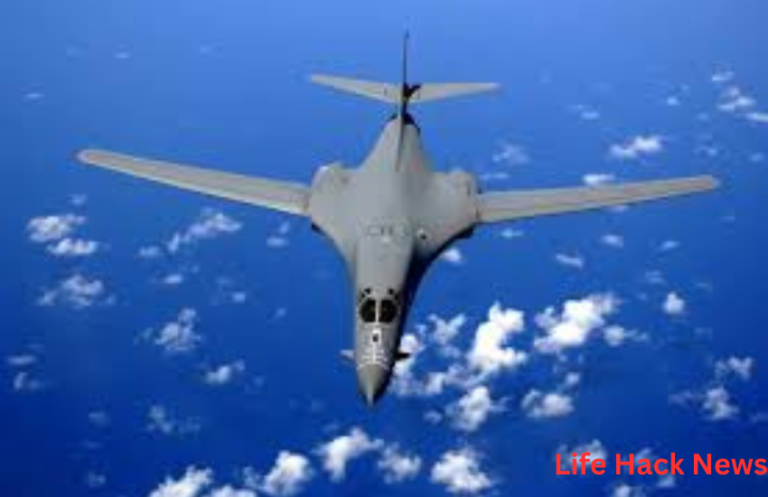
The first time you hear about B-1B Lancer flights Caribbean operations, it may sound like a routine military deployment. In reality, these missions represent something far more significant—a blend of advanced technology, global strategy, and modern deterrence, all unfolding over one of the world’s most geopolitically important regions.
For entrepreneurs, tech professionals, and forward-thinking leaders, understanding these operations offers more than military insight. It reveals how innovation, logistics, and strategic positioning come together at scale—lessons that translate directly into business and leadership.
The Bigger Picture Behind B-1B Lancer Flights Caribbean Missions
The Caribbean might evoke images of beaches and tourism, but in strategic terms, it is a critical crossroads connecting North and South America, major shipping lanes, and key air routes. When the United States deploys B-1B Lancer bombers into this region, it sends a clear signal: readiness, reach, and rapid response capability.
The B-1B Lancer itself is a supersonic heavy bomber capable of carrying the largest conventional payload of both guided and unguided weapons in the U.S. Air Force inventory. Originally designed during the Cold War, it has evolved into a flexible platform for modern warfare, particularly in precision strike missions.
Caribbean deployments often involve training exercises, joint operations with partner nations, and visible demonstrations of force. These missions are not just about combat readiness—they are about influence, reassurance, and strategic messaging.
Why the Caribbean Matters More Than Ever
From a geopolitical standpoint, the Caribbean is increasingly relevant. It sits near key trade routes, emerging energy corridors, and regions facing political instability. The presence of advanced aircraft like the B-1B reinforces stability while deterring potential threats.
For business leaders, this mirrors how companies establish presence in emerging markets. Just as startups expand into strategic regions to gain influence and reduce risk, military operations position assets where they can respond quickly and effectively.
B-1B Lancer flights Caribbean missions often include collaboration with regional partners. These partnerships strengthen alliances and improve interoperability—concepts that closely resemble cross-border business partnerships and ecosystem building in the startup world.
Technology That Powers the Mission
At the heart of these operations lies cutting-edge technology. The B-1B Lancer integrates advanced avionics, radar systems, and electronic warfare capabilities that allow it to operate in complex environments.
What makes the aircraft particularly relevant today is its adaptability. Unlike legacy systems that become obsolete, the B-1B has undergone continuous upgrades, ensuring it remains effective decades after its introduction.
For tech professionals, this is a powerful example of iterative innovation. Instead of discarding a system, the Air Force has continuously improved it—much like how successful companies evolve their products over time.
Here’s a quick overview of the aircraft’s capabilities:
| Feature | Details |
|---|---|
| Maximum Speed | Mach 1.25 (supersonic) |
| Payload Capacity | Up to 75,000 pounds |
| Range | Intercontinental with aerial refueling |
| Primary Role | Long-range strategic and tactical bombing |
| Key Strength | Large payload + flexibility |
This combination of speed, payload, and range allows the B-1B to execute missions that would otherwise require multiple aircraft types.
Strategic Messaging Through Presence
One of the most important aspects of B-1B Lancer flights Caribbean deployments is signaling. These missions communicate capability and intent without necessarily engaging in combat.
In business terms, this is similar to market signaling. When a company enters a new region or launches a high-profile initiative, it sends a message to competitors, investors, and customers.
The presence of a B-1B in the Caribbean signals that the United States can project power quickly and decisively. It reassures allies while discouraging adversaries from taking aggressive actions.
This type of signaling is subtle but powerful. It operates in the space between action and intention—something that experienced leaders understand well.
Logistics: The Invisible Backbone
Behind every B-1B Lancer flight Caribbean mission is a complex logistical operation. These flights require coordination across multiple bases, aerial refueling tankers, maintenance crews, and intelligence systems.
Logistics is often overlooked, but it is where strategy becomes reality. Without efficient logistics, even the most advanced technology fails to deliver impact.
For entrepreneurs, this is a reminder that execution matters as much as vision. A brilliant idea without operational excellence rarely succeeds.
The ability to deploy a B-1B across thousands of miles, sustain it, and integrate it into joint operations is a testament to logistical mastery. It’s the same principle that allows global companies to scale efficiently across markets.
Training and Real-World Readiness
Another key aspect of these missions is training. B-1B Lancer flights Caribbean operations often involve joint exercises with allied air forces. These exercises simulate real-world scenarios, improving coordination and readiness.
Training missions provide a safe environment to test new tactics, technologies, and strategies. They also build trust between participating nations.
In the startup world, this is akin to pilot programs or beta testing. Companies refine their products and processes before scaling them to a broader audience.
The lesson here is clear: preparation reduces risk and increases the likelihood of success.
Innovation in Modern Airpower
The evolution of the B-1B Lancer reflects a broader trend in military and technological innovation. Modern airpower is no longer just about speed or firepower—it’s about integration.
Data, communication systems, and real-time intelligence now play a central role in mission success. The B-1B can integrate with satellites, drones, and other aircraft to create a networked operational environment.
This shift toward interconnected systems mirrors trends in the tech industry. Businesses are moving away from isolated tools toward integrated ecosystems that enable better decision-making.
B-1B Lancer flights Caribbean missions showcase how powerful this integration can be when executed effectively.
Risk Management and Strategic Flexibility
Every deployment involves risk. Weather conditions, geopolitical tensions, and operational challenges all factor into mission planning.
What sets successful operations apart is the ability to adapt. The B-1B’s flexibility allows it to respond to changing conditions without compromising mission objectives.
For business leaders, this is a critical takeaway. Markets change, technologies evolve, and unexpected challenges arise. Organizations that build flexibility into their strategies are better positioned to navigate uncertainty.
B-1B Lancer flights Caribbean operations demonstrate how adaptability can be built into both systems and processes.
The Human Element Behind the Machine
While technology plays a central role, these missions ultimately depend on people. Pilots, engineers, analysts, and support teams work together to execute complex operations.
Human expertise remains irreplaceable. Training, experience, and decision-making skills determine how effectively technology is used.
In the business world, this underscores the importance of talent. The best tools and systems are only as effective as the people who use them.
Organizations that invest in their teams—through training, development, and culture—gain a significant competitive advantage.
What Entrepreneurs Can Learn from B-1B Lancer Flights Caribbean Operations
At first glance, military aviation and entrepreneurship may seem unrelated. However, the principles behind these operations offer valuable insights for business leaders.
The emphasis on adaptability, continuous improvement, and strategic positioning is directly applicable to startups and growing companies.
The importance of partnerships mirrors how businesses collaborate to expand their reach. The focus on logistics highlights the need for strong operational foundations.
Perhaps most importantly, these missions demonstrate the power of clarity. Every operation has a defined objective, and every action supports that goal.
For entrepreneurs, clarity of purpose is essential. It aligns teams, guides decisions, and drives execution.
The Future of B-1B Lancer Flights in the Caribbean
As global dynamics continue to evolve, the role of B-1B Lancer flights Caribbean missions is likely to expand. Emerging technologies, shifting alliances, and new challenges will shape how these operations are conducted.
The integration of artificial intelligence, advanced sensors, and autonomous systems will further enhance capabilities. These innovations will make missions more efficient, precise, and adaptable.
For tech professionals, this represents a glimpse into the future of complex systems. The convergence of hardware, software, and data will define the next generation of both military and commercial technologies.
The Caribbean will remain a key region for these developments, serving as both a strategic hub and a testing ground for new approaches.
Conclusion: Strategy, Innovation, and Execution in Action
B-1B Lancer flights Caribbean operations are more than military exercises—they are a masterclass in strategy, technology, and execution. They demonstrate how advanced systems, skilled teams, and clear objectives come together to achieve complex goals.
For entrepreneurs and tech leaders, the lessons are clear. Success requires more than innovation; it demands adaptability, strong partnerships, and operational excellence.
Whether you’re scaling a startup or leading a global organization, the principles behind these missions offer a valuable framework. In a world defined by rapid change, the ability to combine strategy with execution is what sets leaders apart.
