

In an age where startups obsess over user interfaces and seamless experiences, it’s easy to forget that the pursuit of intuitive design didn’t begin with software. Long before touchscreens and AI assistants, the clavecin harpsichord stood as a remarkable feat of engineering—an instrument that merged artistry, mechanics, and user interaction in ways that still resonate today. For founders, entrepreneurs, and tech professionals, understanding this instrument isn’t just about music history; it’s about appreciating how innovation evolves, adapts, and shapes culture.
What Is a Clavecin Harpsichord?
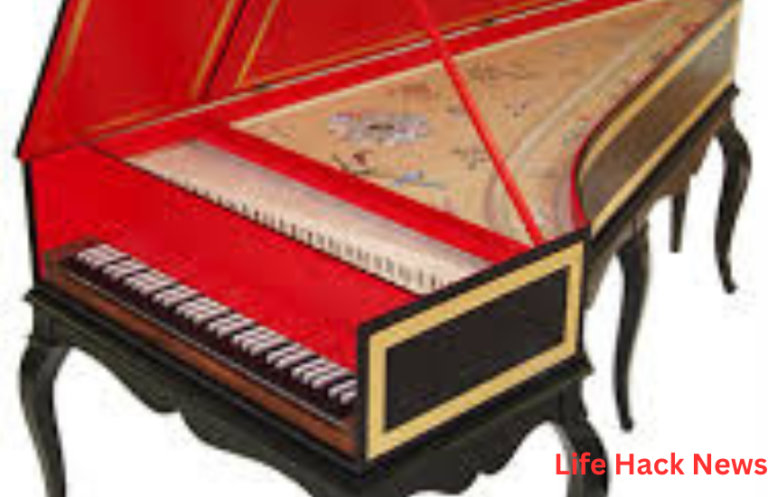
The clavecin harpsichord, often simply called a harpsichord, is a keyboard instrument that predates the modern piano. Originating in Europe during the late Middle Ages and flourishing through the Renaissance and Baroque periods, it produces sound by plucking strings rather than striking them. When a key is pressed, a small plectrum lifts and plucks the string, creating a crisp, bright tone.
Unlike the piano, where pressure controls volume, the clavecin harpsichord operates with a fixed dynamic range. This limitation, however, led to creative workarounds—composers and performers relied on layering, ornamentation, and manual switching between keyboards (manuals) to create expressive depth.
From a modern perspective, this is a classic example of constraints driving innovation. Just as early computing systems had limited memory and processing power, the harpsichord’s mechanical boundaries inspired entirely new forms of artistic expression.
A Brief History of the Clavecin Harpsichord
The clavecin harpsichord reached its peak during the 16th to 18th centuries, becoming the centerpiece of European musical life. It was widely used in royal courts, churches, and private homes. Countries like France, Italy, and the Netherlands developed distinct styles, each reflecting cultural preferences and technical refinements.
French builders, for instance, emphasized elegance and tonal richness, while Italian harpsichords were lighter and more direct in sound. The instrument became synonymous with composers such as Johann Sebastian Bach, François Couperin, and Domenico Scarlatti, whose works pushed the boundaries of what the harpsichord could achieve.
However, by the late 18th century, the rise of the piano—capable of dynamic expression and greater emotional range—led to the harpsichord’s decline. It wasn’t until the 20th century that a revival brought it back into both historical performance and contemporary experimentation.
Mechanics as a Lesson in Design Thinking
At its core, the clavecin harpsichord is a masterclass in mechanical design. Each key connects to a jack—a vertical piece of wood that holds the plectrum. When the key is pressed, the jack rises, plucks the string, and then falls back into place, ready for the next note.
This system reflects principles that modern product designers will recognize instantly:
- Precision engineering: Every component must align perfectly for consistent performance.
- Feedback loops: The tactile response of the keys informs the player’s interaction.
- Reliability: The instrument must perform consistently across thousands of keystrokes.
For startup founders, this mirrors the importance of building systems that are not only functional but also intuitive and dependable. The clavecin harpsichord didn’t just produce sound—it created an experience.
Comparing the Clavecin Harpsichord and the Piano
To better understand the instrument’s uniqueness, it helps to compare it directly with the piano, its evolutionary successor.
| Feature | Clavecin Harpsichord | Piano |
|---|---|---|
| Sound Production | Strings are plucked | Strings are struck with hammers |
| Dynamic Control | Limited (fixed volume) | Wide dynamic range |
| Tone | Bright, crisp | Warm, sustained |
| Touch Sensitivity | Minimal | Highly responsive |
| Historical Peak | 16th–18th centuries | 18th century to present |
| Use in Modern Music | Niche, historical and experimental | Universal across genres |
This comparison highlights a key insight: innovation doesn’t always replace what came before—it builds on it. The piano didn’t make the clavecin harpsichord obsolete; it extended its legacy.
The Clavecin Harpsichord in Modern Context
Today, the clavecin harpsichord occupies a fascinating niche. It’s used in historically informed performances, film scores, and even experimental music. Its distinct sound—precise and articulate—offers something that digital instruments often struggle to replicate authentically.
For tech professionals, this raises an important question: why do older technologies persist?
The answer lies in authenticity and differentiation. In a crowded digital landscape, uniqueness becomes a competitive advantage. Just as brands seek distinctive voices, musicians and composers turn to instruments like the harpsichord to stand out.
In fact, parallels can be drawn to the resurgence of vinyl records or analog photography. These “obsolete” technologies offer tactile and sensory experiences that modern tools sometimes lack.
Innovation Under Constraints
One of the most compelling aspects of the clavecin harpsichord is how it demonstrates innovation under constraint. Without the ability to vary volume through touch, musicians developed alternative techniques:
They used multiple keyboards to switch between louder and softer registers. They employed intricate ornamentation to add emotional nuance. They structured compositions to create contrast through rhythm and harmony rather than dynamics.
For entrepreneurs, this is a powerful lesson. Constraints—whether financial, technical, or market-driven—can actually fuel creativity. Some of the most groundbreaking startups have emerged not despite limitations, but because of them.
Consider how early social media platforms thrived with minimal features, or how lean startups iterate quickly with limited resources. The clavecin harpsichord embodies this mindset centuries before the term “lean innovation” existed.
Craftsmanship and Attention to Detail
Each clavecin harpsichord is a work of art. Historically, builders invested immense effort into both functionality and aesthetics. Intricate decorations, hand-painted lids, and carefully selected woods transformed the instrument into a visual as well as auditory masterpiece.
This dual focus on form and function is highly relevant today. In the tech world, products that succeed often combine robust performance with thoughtful design. Users don’t just want tools—they want experiences.
The harpsichord reminds us that craftsmanship matters. Whether you’re building software, hardware, or a brand, attention to detail can be the difference between good and exceptional.
Lessons for Startup Founders and Tech Leaders
While it may seem unusual to draw lessons from a centuries-old musical instrument, the clavecin harpsichord offers surprisingly relevant insights for modern innovators.
First, it underscores the importance of user interaction. The tactile relationship between musician and instrument mirrors the relationship between users and technology. Great products feel intuitive and responsive.
Second, it highlights the value of iteration. Over centuries, builders refined the harpsichord’s design, improving sound quality and playability. Similarly, startups must continuously evolve based on feedback and performance.
Third, it demonstrates the power of specialization. The harpsichord excels in specific contexts, particularly Baroque music. In business, focusing on a niche can lead to mastery and differentiation.
Finally, it shows that legacy matters. Even as new technologies emerge, older systems can retain relevance by offering unique value. The key is not to compete directly with newer solutions, but to complement them.
The Future of the Clavecin Harpsichord
Looking ahead, the clavecin harpsichord is unlikely to return to mainstream dominance—but that’s not its role. Instead, it will continue to inspire musicians, historians, and innovators alike.
Digital modeling and hybrid instruments are already exploring ways to replicate and expand its sound. At the same time, traditional craftsmanship ensures that authentic harpsichords remain prized possessions.
This dual path—preservation and innovation—is something every industry grapples with. How do you honor the past while embracing the future? The harpsichord offers a compelling answer: by doing both.
Conclusion: A Timeless Blueprint for Innovation
The clavecin harpsichord is more than an instrument—it’s a blueprint for how innovation unfolds over time. It shows us that constraints can spark creativity, that design and functionality must coexist, and that even as technology evolves, the past continues to shape the future.
For startup founders and tech professionals, these lessons are invaluable. In a world driven by rapid change, it’s easy to focus solely on what’s new. But sometimes, the most profound insights come from looking back.
The next time you think about building a product, refining a user experience, or navigating limitations, consider the humble clavecin harpsichord. Its story is a reminder that innovation isn’t just about invention—it’s about adaptation, craftsmanship, and the enduring pursuit of excellence.
