

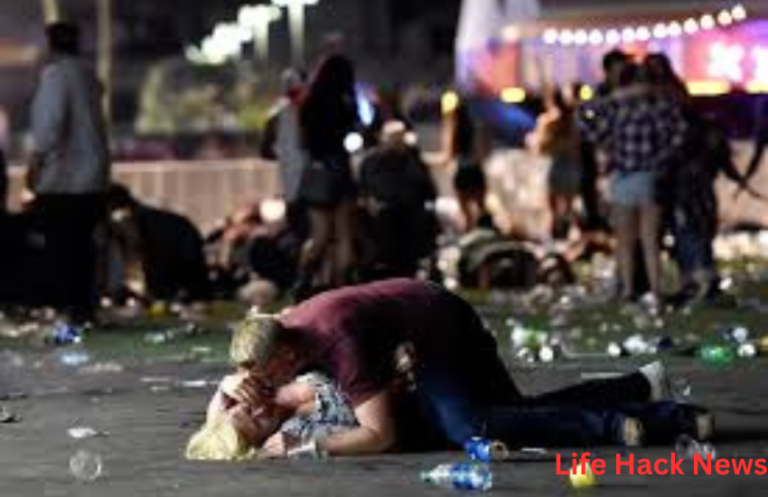
The phrase gunfire Las Vegas evokes more than headlines—it represents a moment that tested public safety systems, communication networks, and human resilience at scale. For startup founders, entrepreneurs, and tech professionals, such events are not just distant tragedies. They are real-world stress tests that reveal how systems break, how people respond, and how innovation can either fail or rise to the occasion.
Understanding what happened, how institutions responded, and where technology played a role offers valuable lessons for anyone building products, platforms, or organizations in an increasingly unpredictable world.
The Reality Behind Gunfire Las Vegas
When people recall gunfire incidents in Las Vegas, they often think of chaos, confusion, and the rapid spread of information—both accurate and misleading. These moments unfold in real time, amplified by smartphones, social media, and decentralized communication platforms.
What makes such incidents particularly important for digital leaders is not just the event itself, but how quickly information travels, how systems respond under pressure, and how individuals make decisions in the absence of clarity.
In a city known for entertainment, tourism, and high-density gatherings, the stakes are amplified. A single moment can ripple across industries—from hospitality and transportation to cybersecurity and emergency response infrastructure.
Crisis as a Systems Test
Every crisis reveals the strengths and weaknesses of interconnected systems. In the case of gunfire Las Vegas incidents, several layers come into play simultaneously: law enforcement coordination, emergency medical response, media coverage, and digital communication networks.
For founders and engineers, this is the equivalent of a full-scale, real-world stress test.
Platforms experience sudden spikes in usage. Messaging apps see surges in activity. Mapping and navigation tools become critical for evacuation and safety. Meanwhile, misinformation can spread faster than verified updates, creating additional challenges.
This dynamic underscores a critical principle: systems are only as strong as their performance under extreme conditions.
The Role of Technology in Real-Time Response
Technology plays a dual role during crisis events—it can either reduce chaos or amplify it.
During gunfire Las Vegas situations, several categories of technology become especially relevant:
- Real-time communication platforms
- Emergency alert systems
- Social media networks
- Data analytics and surveillance tools
The effectiveness of these technologies depends heavily on design decisions made long before any crisis occurs.
For example, latency in communication platforms can delay critical updates. Poor moderation systems can allow misinformation to spread unchecked. Weak infrastructure can lead to outages when demand spikes.
For startups, this raises an important question: Is your product built for normal conditions—or for worst-case scenarios?
Information Flow: Speed vs Accuracy
One of the most defining features of gunfire Las Vegas incidents is the race between speed and accuracy.
In the first minutes of any crisis, information is fragmented. Eyewitness accounts vary. Official sources take time to confirm details. Meanwhile, social media fills the gap.
This creates a dangerous paradox:
The faster information spreads, the less reliable it often is.
For digital platforms, this presents a design challenge. Should systems prioritize speed, allowing users to share freely? Or should they introduce friction to ensure accuracy?
The answer is not binary. The most resilient platforms find ways to balance both.
A Framework for Crisis-Ready Systems
To better understand how organizations can prepare for high-impact events, consider the following framework:
| Component | Key Focus | Risk if Ignored | Opportunity for Innovation |
|---|---|---|---|
| Infrastructure | Scalability and uptime | System crashes under load | Cloud optimization, auto-scaling |
| Communication | Real-time updates | Delayed or fragmented information | Low-latency messaging systems |
| Data Integrity | Accuracy and verification | Spread of misinformation | AI-driven fact-checking |
| User Experience | Clarity under stress | Confusion and poor decision-making | Crisis-friendly UI/UX design |
| Security | Protection against misuse | Exploitation or panic amplification | Advanced moderation tools |
This table is not just theoretical—it reflects real challenges observed during crisis events like gunfire Las Vegas situations.
Lessons for Startup Founders
For founders, the takeaway is not to build specifically for crisis events, but to build resilient systems that can adapt to them.
Startups often prioritize speed to market, rapid iteration, and growth metrics. While these are essential, they can sometimes come at the expense of robustness.
Gunfire Las Vegas scenarios highlight the importance of:
- Designing for scale from day one
- Anticipating unexpected use cases
- Building trust through reliability
- Ensuring systems degrade gracefully rather than fail abruptly
In other words, resilience is not a feature—it’s a foundation.
Human Behavior Under Pressure
Technology does not operate in isolation. It interacts with human behavior, especially during high-stress situations.
In moments involving gunfire Las Vegas, people tend to:
- Seek immediate information
- Share unverified updates
- Rely on familiar platforms
- Act quickly, often without full context
For product designers and engineers, this means building systems that account for emotional decision-making, not just rational use.
Features like clear alerts, verified badges, and simplified interfaces can make a significant difference when users are under pressure.
The Business Impact of Crisis Events
Beyond the immediate human impact, incidents like gunfire Las Vegas have broader economic and operational consequences.
Businesses may face:
- Temporary shutdowns
- Reputational challenges
- Increased security costs
- Shifts in consumer behavior
For startups operating in sectors like travel, events, or urban services, these risks are particularly relevant.
However, crises also create opportunities for innovation. New solutions often emerge in response to gaps exposed during such events.
Examples include:
- Enhanced emergency communication tools
- AI-powered monitoring systems
- Crowd management technologies
- Safety-focused mobile applications
The key is to approach innovation with responsibility and ethical consideration.
Media, Narratives, and Digital Responsibility
Another critical dimension of gunfire Las Vegas events is how narratives are shaped.
Media coverage plays a central role, but digital platforms increasingly influence public perception. Algorithms determine what content is amplified, what is suppressed, and how information spreads.
For tech leaders, this raises important ethical questions:
- How should platforms handle sensitive content?
- What responsibility do they have in preventing panic?
- How can they promote accurate information without censorship concerns?
These are not easy questions, but they are essential ones.
Building responsible systems requires collaboration between engineers, policymakers, and community stakeholders.
Designing for the Unknown
One of the most valuable lessons from gunfire Las Vegas incidents is that uncertainty is inevitable.
No system can predict every scenario. However, systems can be designed to adapt.
This includes:
- Modular architectures that allow rapid updates
- Real-time monitoring and analytics
- Redundant systems to prevent single points of failure
- Clear escalation protocols
For startups, this mindset can be a competitive advantage. Companies that plan for uncertainty are better positioned to handle both crises and rapid growth.
The Intersection of Safety and Innovation
Safety is often seen as a constraint on innovation. In reality, it can be a catalyst.
Gunfire Las Vegas events demonstrate that the demand for safer, more reliable systems is not abstract—it is immediate and real.
Startups that prioritize safety can differentiate themselves in crowded markets. They can build trust with users, partners, and regulators.
This is particularly relevant in industries like:
- Smart cities
- Mobility and transportation
- Event management platforms
- Social media and communication tools
In each of these sectors, safety and innovation are deeply interconnected.
Building Trust in a Digital World
Trust is one of the most valuable assets any company can have. It is also one of the easiest to lose.
During crisis events, users quickly identify which platforms they can rely on. Systems that fail, misinform, or amplify panic risk long-term damage.
On the other hand, platforms that provide timely, accurate, and clear information can strengthen user loyalty.
For founders, this reinforces a simple but powerful principle:
Trust is built before it is needed.
Conclusion: Turning Tragedy into Insight
The phrase gunfire Las Vegas will always carry weight. It represents loss, urgency, and the limits of human and technological systems. But it also offers valuable lessons for those building the future.
For startup founders, entrepreneurs, and tech professionals, the challenge is not just to innovate—but to innovate responsibly.
Crisis events reveal what truly matters: reliability, clarity, and trust. They expose weaknesses but also highlight opportunities to improve.
By studying these moments, we can build systems that are not only smarter, but stronger. Systems that serve people not just in times of convenience, but in moments of critical need.
In a world where uncertainty is constant, resilience is the ultimate competitive advantage.
